
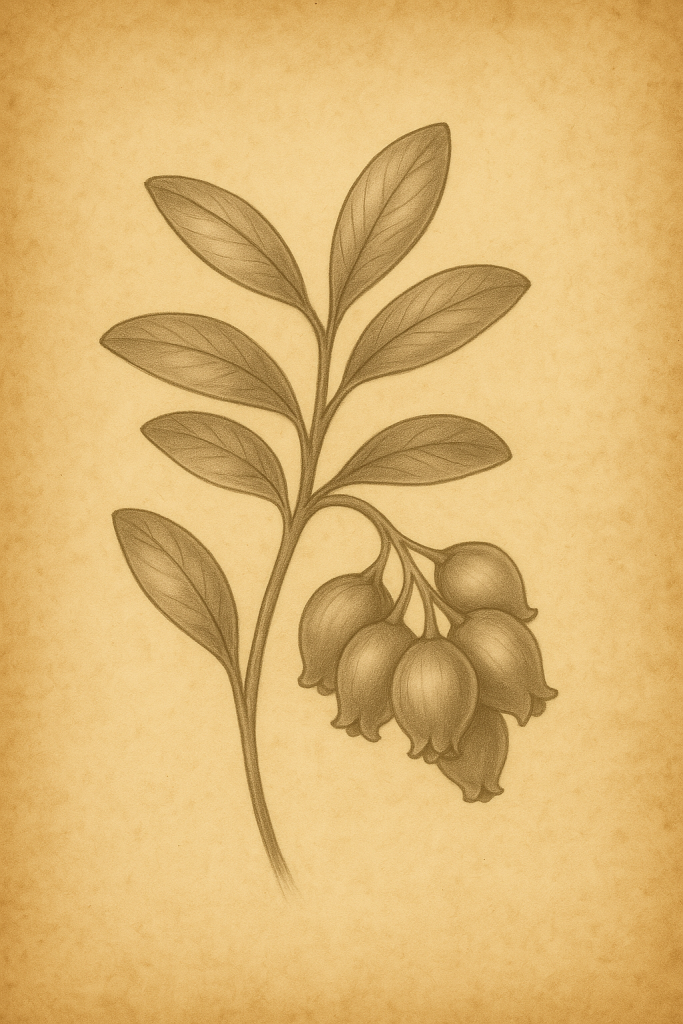
ENGLISH NAME: Bearberry
LATIN NAME: Arctostaphylos uva-ursi
LOCAL NAMES:
Czechia: Medvědice lékařská
Turkey: Ayı üzümü
Bulgaria: Мечо грозде (Mecho grozde)
Georgia: დათვის კენკრა (Datvis kenkra)
COUNTRY: Turkey, Bulgaria,
Czechia, Georgia
WHERE TO FIND IT:
Region: Guria, widespread in alpine and subalpine zones
Elevation: 1,000–2,400 meters above sea level
Terrain: Dry, sandy, or rocky soils; heathlands, moorlands, mountainous and
forested regions
DESCRIPTION:
Bearberry is a low-growing evergreen shrub (10–30 cm high) that forms dense
mats with trailing stems. Its small, dark green, leathery leaves are glossy and
elliptical (1–3 cm long). In spring, it bears small, bell-shaped pink or white
flowers, which develop into bright red berries (5–10 mm diameter). It is
well-adapted to harsh, dry, and nutrient-poor environments.
USABLE PARTS: Leaves
MEDICINAL
PROPERTIES:
– Active Compounds: Leaves
contain arbutin, hydroquinone, tannins, and flavonoids
– Traditional Uses:
Young leaves: hematological purifier
Mature leaves: anti-diuretic, anti-inflammatory, blood-clotting, and
anti-rheumatic properties
Flowering branches: sometimes used for heart support
Berries: occasionally for indigestion (rarely used medicinally compared to
leaves)
UNDESIRED EFFECTS:
– Contains arbutin, which is metabolized to hydroquinone; prolonged or
high-dose use can be toxic, causing nausea, vomiting, and tinnitus
COMBINING WITH
OTHER MEDICINES:
– Use caution; always consult a healthcare provider before combining with
urinary tract medications or other diuretics
PREPARATION:
– Infusion: Steep 1–2 tsp dried
(or more fresh) leaves per cup of hot water for 5–10 min, strain, and consume
for urinary tract support
– Tincture: Macerate dried
leaves in high-proof alcohol to extract active compounds and preserve them
– Powder: Dry and grind leaves
for powdered preparations
HARVEST TIME:
– Late spring to early summer
HARVEST METHOD:
– On a dry morning, snip fully formed (not over-mature) leaves at the stems
using sharp scissors or shears, taking care not to damage the plant
CONSERVATION
(STORAGE):
– Rinse leaves gently under cool water, air-dry in a shaded, ventilated area in
a single layer
– Turn leaves periodically; confirm crispness to ensure full dryness
– Once dried, separate from stems and discard any damaged parts
– Store in airtight glass jars in a cool, dark location